
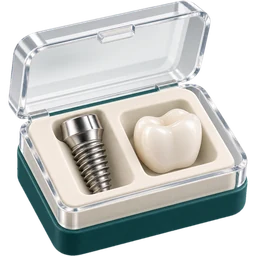
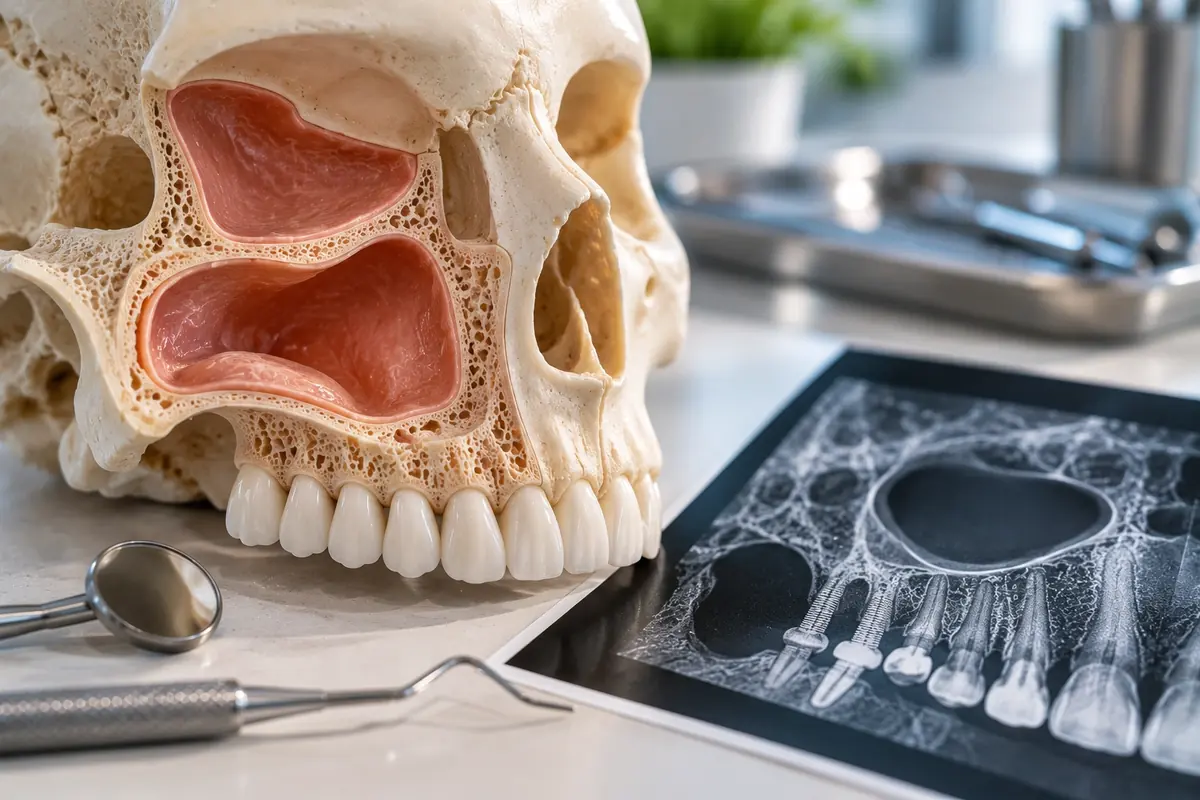
A sinus lift adds bone under the sinus in the upper jaw so that implants can be placed at the back of the upper jaw. It is elective, adds months to treatment, and carries real complication rates that the hospital leaflet states.
Ask whether you need it, which approach and graft material will be used, and who treats complications.
What patients are quoted
We are collecting anonymous quotes for this treatment. Figures appear here once at least ten quotes are in.
Share the price you were quoted. It is multiple choice only and asks for no personal details. How the figures are calculated.
At a glance
- Can it be undone?
- No.
- How long?
- Procedure 45 minutes to two hours; six to 12 months from surgery to final tooth (CUH).
- Evidence figure
- Membrane tear 19% (external) vs 3.8% (internal); infection 2.9% vs 0.8% (CUH).
- Ask first
- Do I need it, and who treats complications?
Sinus lift timeline
- Surgery45 minutes to two hours, usually awake
- ReviewStitches out about one week later
- RecoveryTwo to three weeks
- Graft matures4 to 12 months
- Implants, then final toothOverall 6 to 12 months or longer
Source: Cambridge University Hospitals NHS Foundation Trust.
What a sinus lift is
Cambridge University Hospitals says a sinus lift is a common surgery that adds bone under the upper jaw’s sinus so implants can be placed. The sinus lining is lifted and graft material packed underneath. People who have lost upper back teeth often do not have enough bone for implants. The page describes it as completely elective, with alternatives such as dentures, bridges or no replacement.
Two approaches
| Approach | What it involves | Notes (CUH) |
|---|---|---|
| External (cheek side) | A small window is opened in the bone, the sinus lining pushed up and graft packed below. | If there is little existing bone, implants are usually placed later after healing. If some bone exists, implants can be placed at the same time. |
| Internal | The sinus floor is gently tapped up through the implant site. | Needs about 3 mm of extra bone height and the implant is placed in the same operation. |
- Anaesthetic. Most are done awake under local anaesthetic. Sedation or general anaesthetic only if surgery will be difficult or several procedures are needed. No escort needed unless sedation or general anaesthetic is used.
- Graft materials. Own bone, human, animal and synthetic materials. The most common graft is Bio-Oss (sterilised cattle bone) and the most common membrane Bio-Gide (dissolvable, pig origin). Tell the surgeon if you have concerns about animal-derived products.
Healing and timeline
- The graft takes 4 to 12 months to mature. With the external approach, bone takes 4 to 9 months to mesh with your own bone before implants are placed.
- The overall timeframe from surgery to restoration is six to 12 months, and can be longer.
- Stitches are removed at a review one week after surgery. Full recovery usually takes two to three weeks.
This is not a short-trip treatment. Plan who will review you, remove stitches and place the implants.
Risks and aftercare
| Risk | External | Internal |
|---|---|---|
| Sinus membrane tear | 19% | 3.8% |
| Infection | 2.9% | 0.8% |
- Later problems stated: graft exposure (3%), no graft present after maturation (1.9% with the external approach; higher risk in smokers) and insufficient bone for implants (1%).
- Rare but serious: temporary numbness of the cheek, upper gums and teeth (very rarely permanent), a connection between sinus and mouth, and long-term infection that may require graft removal.
- Aftercare: do not blow your nose for two weeks; menthol steam inhalations three times a day for ten days; take prescribed antibiotics or decongestants; contact the surgeon if swelling or pain worsens after two days, bleeding does not stop, you have a fever or feel unwell.
Questions to ask before you agree
Tap a question to copy it, then paste it into a message or an email.
Sinus lift checklist
Tick items off as you complete them. Your ticks stay in this browser only.
Before you book in Türkiye
The same checks apply whichever treatment you choose. Each links to a full guide.
- Check the authorisation. Make sure the clinic, and any agency, holds a Ministry of Health authorisation for international patients. How to verify it
- Get the plan in writing, tooth by tooth. It should name the treatment, materials and brands for each tooth, and the full price. Questions to ask
- Read the guarantee before you pay. Find out what it covers, for how long and who pays for travel if something needs fixing. Guarantees
- Know what you are agreeing to. You have the right to clear information about risks and alternatives before you consent. Informed consent
- Take your records home. Ask for X-rays, scans and a written summary, including implant brands and sizes. Dental records
- Plan aftercare before you go. Find a dentist at home who will see you for checks and problems. Follow-up care
- Know where to turn if things go wrong. Complaint routes
Frequently asked questions
Is a sinus lift painful?
Most are done awake under local anaesthetic and are not normally painful (CUH).
Can implants be placed at the same time?
Sometimes, if there is enough existing bone (CUH). Otherwise later.
Can the sinus lift fail?
CUH gives graft failure of 1.9% for the external approach. A failed membrane repair can usually be retried after healing.
Is bone grafting only for sinus lifts?
No. This page covers the sinus lift only. Other bone grafting is not yet described here.
Sources
Further reading from NHS and professional sources: