
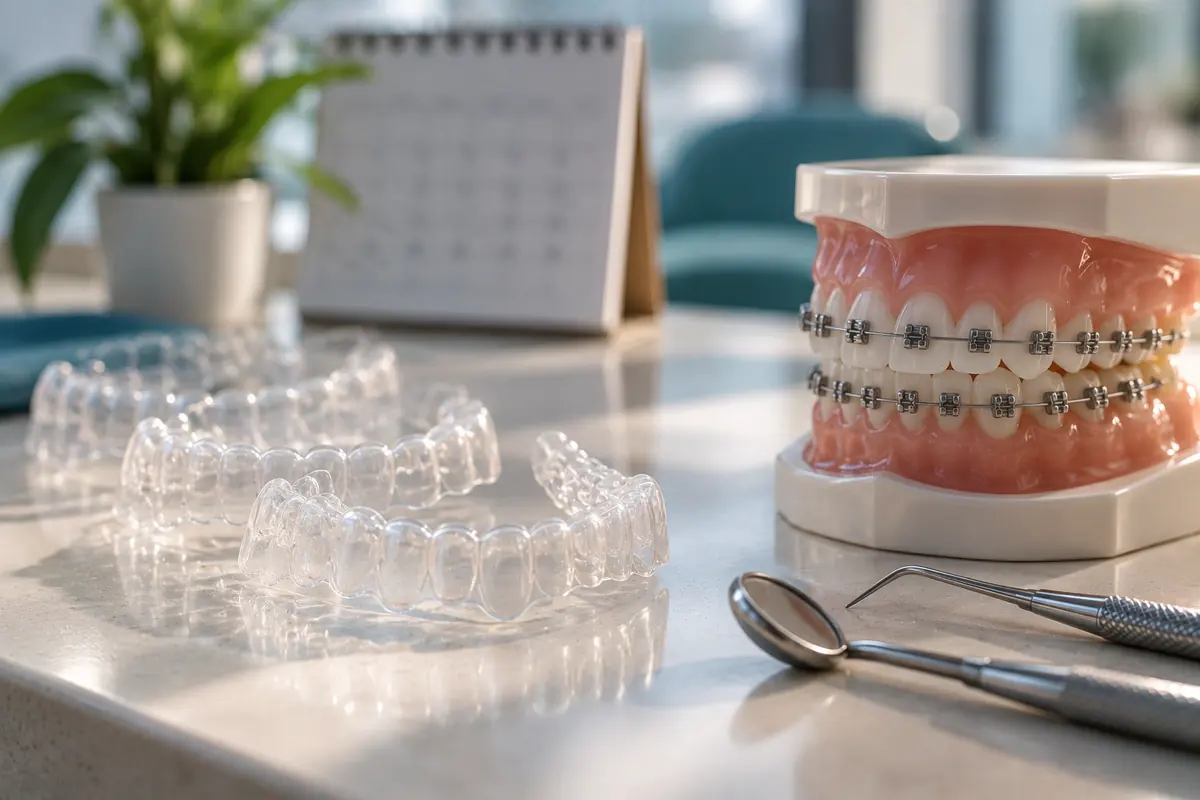
Braces and clear aligners move teeth slowly, over months to years, with check-ups along the way and a retainer afterwards. That makes orthodontics the treatment least suited to a short trip, unless a qualified orthodontist or dentist near home will supervise it.
Whatever the product, treatment should start with a proper examination by a registered dentist or orthodontist, and a named professional you can reach if something goes wrong.
What patients are quoted
We are collecting anonymous quotes for this treatment. Figures appear here once at least ten quotes are in.
Share the price you were quoted. It is multiple choice only and asks for no personal details. How the figures are calculated.
At a glance
- Can it be undone?
- Teeth move. A retainer holds them in place afterwards.
- How long?
- Fixed braces usually 1 to 2 years, adjusted every 6 to 8 weeks (NHS).
- Safeguard
- In-person examination and a named, reachable professional (GDC, FDA).
- Ask first
- Who examines me in person, and who follows me up at home?
Braces timeline
- AssessmentExamination, X-rays, photographs, scans, plan
- Braces fittedBrackets and wires
- AdjustmentsEvery 6 to 8 weeks
- TreatmentUsually 1 to 2 years
- RetainerWorn afterwards to hold teeth in place
Sources: NHS; British Orthodontic Society.
Braces and aligners
| Type | What it is | Points from the sources |
|---|---|---|
| Fixed braces | Brackets and wires fixed to the teeth. | The NHS says fixed metal braces are commonly used and usually stay in place for 1 to 2 years, with adjustment appointments every 6 to 8 weeks. |
| Clear aligners | A series of custom-made, removable plastic trays that move the teeth in small steps. | The British Orthodontic Society says they suit mild to moderate irregularity and mild spacing, and that severe crowding, extractions, complex movements or jaw-size problems may need fixed appliances. |
| Retainers | Worn after treatment to hold the teeth in the new position. | Needed after braces or aligners. The orthodontist decides how long to wear them. |
Planning, time and visits
- Assessment first. The BOS calls a proper orthodontic assessment, diagnosis and treatment plan essential to successful aligner treatment and recommends an opinion from an orthodontic specialist. Assessment may include X-rays, photographs and scans.
- It is not a one-trip treatment. With braces, adjustments are every 6 to 8 weeks for 1 to 2 years. Aligners also need monitoring, because teeth do not always move as planned.
- Plan the follow-up before you start. Who adjusts the braces or reviews the aligners back home, and who is responsible if something goes wrong?
- Retainers are part of the treatment. Without them teeth can move back.
Risks and safeguards
- Direct-to-consumer aligners. The US Food and Drug Administration says clear aligners are only safe to use under the supervision of a licensed practitioner and recommends an in-person evaluation first and periodic in-person visits. It reports problems from non-authorised direct-to-consumer products including dental pain, jaw pain, bite problems, worsening misalignment and new gaps.
- The UK regulator's position. The General Dental Council says there is no effective substitute for a physical clinical examination, that the responsible dental professional must keep full records, obtain valid consent, and be named and reachable by the patient.
- Treatment may not go as planned. The FDA notes treatment may not progress as intended if aligners are not worn as directed, and that existing crowns, fillings and implants may loosen.
- Decay and gums. Sugar and poor cleaning cause decay around braces. Contact the orthodontist if gums become very red, swollen or painful, or if the braces break (NHS).
- Previous trauma. Tell the orthodontist about any past knock to a front tooth (NHS).
If you are thinking of orthodontics abroad
- If the plan is to start aligners abroad and continue by post, ask who is the registered professional responsible, how you would contact them, and who will examine you in person.
- A short trip might suit a defined step, such as attachments or a retainer fitting, but only with a plan that your dentist at home has agreed.
- Keep the treatment plan, the scans and the digital files for your aligners. A new orthodontist will need them.
- Ask what the price includes: all sets of aligners, refinements, retainers and review visits.
Questions to ask before you agree
Tap a question to copy it, then paste it into a message or an email.
Orthodontics checklist
Tick items off as you complete them. Your ticks stay in this browser only.
Before you book in Türkiye
The same checks apply whichever treatment you choose. Each links to a full guide.
- Check the authorisation. Make sure the clinic, and any agency, holds a Ministry of Health authorisation for international patients. How to verify it
- Get the plan in writing, tooth by tooth. It should name the treatment, materials and brands for each tooth, and the full price. Questions to ask
- Read the guarantee before you pay. Find out what it covers, for how long and who pays for travel if something needs fixing. Guarantees
- Know what you are agreeing to. You have the right to clear information about risks and alternatives before you consent. Informed consent
- Take your records home. Ask for X-rays, scans and a written summary, including implant brands and sizes. Dental records
- Plan aftercare before you go. Find a dentist at home who will see you for checks and problems. Follow-up care
- Know where to turn if things go wrong. Complaint routes
Frequently asked questions
Are aligners faster than braces?
The sources we reviewed do not say that. Treatment time depends on the problem. Fixed braces typically stay in place for 1 to 2 years on the NHS.
Can I do aligners entirely online?
The GDC says there is no effective substitute for a physical clinical examination and the FDA recommends in-person evaluation and periodic visits. Be careful with fully remote offers.
Do I need a retainer afterwards?
Yes. After braces or aligners a retainer holds the teeth in position. Ask how long to wear it and what it costs.
Do adults have to pay?
In England, NHS braces are usually free only for under 18s and adults usually pay privately. Prices elsewhere vary.