
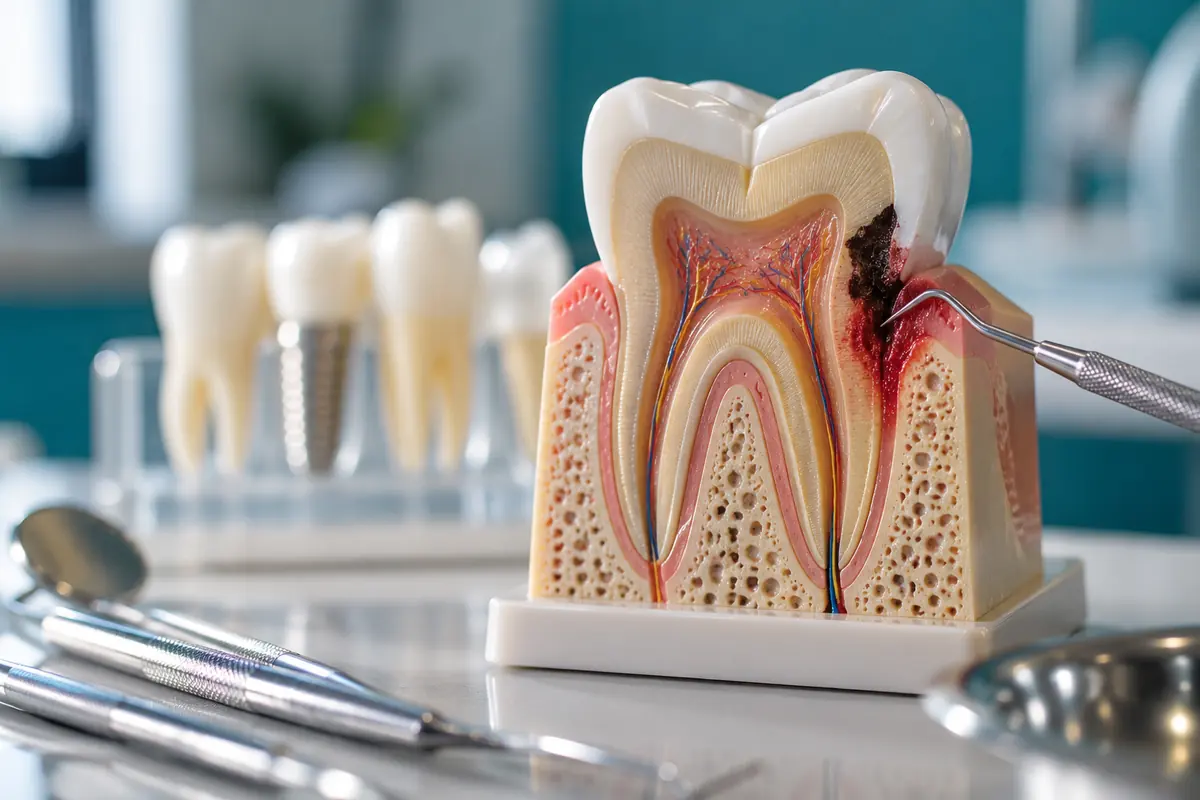
The risks of dental treatment abroad are real, but most of the risk comes from individual decisions, the facility and the follow-up arrangements rather than from the country. The problems documented most often are: too much healthy tooth removed (especially a crown where a veneer was expected); complications and maintenance needs of long-lived work such as implants and crowns; infection control and medicines; follow-up that breaks down; and the cost of correction.
This page is not meant to frighten you. It shows where each risk sits and how to reduce it. It would be wrong to treat every facility alike: many dentists in Türkiye practise safe, good dentistry.
The risk map
| Risk | What it means | Evidence | How to reduce it |
|---|---|---|---|
| Removing too much tooth | A crown (which cuts the whole tooth) is made where a thin veneer was expected. A large part of a healthy tooth is lost for good. | Edelhoff and Sorensen (2002), as reported: veneer preparation removes about 3–30% of the crown, crown preparation about 63–72%. | Get “veneer or crown?” in writing, how much tissue per tooth, and the less invasive options (see the questions page). |
| Implant and surrounding tissue problems | Inflammation and bone loss around an implant (peri-implantitis), and implant loss. | AO/AAP review (2025): peri-implant mucositis in about 46% of patients and peri-implantitis in about 21%. Figures vary with definitions. | A regular maintenance programme, a dentist at home who does gum care, and an honest talk about risk factors (gum disease, diabetes, smoking). |
| Infection and infection control | Infection after surgery, and passing on infection if sterilisation is poor. | CDC: every procedure carries infection risk, and infection control may be weak in some facilities. TravelHealthPro: exposure to blood-borne viruses is a risk with treatment abroad. | Ask about sterilisation and single-use items, use the OSAP “Traveler's Guide to Safe Dental Care” questions, and look at how clean and orderly the setting is. |
| Follow-up falling away | You cannot reach the treating dentist when a problem appears, or check-ups do not happen. | BDA survey: over 90% of dentists had seen patients treated abroad, many with complications. Crowns and implants most often needed correction. | A follow-up plan, a conversation with your local dentist beforehand, a written guarantee and a named contact (see the aftercare and guarantee pages). |
| Cost of putting things right | Retreatment costs and extra travel. | In the BDA survey, 65% of dentists said patients paid at least £500 for corrections. CDC says care after a complication can be costly and insurance may not cover it. | Weigh the total cost together with the risk of correction. |
| Blood clots | Surgery together with flying can raise the risk of a clot (deep vein thrombosis). | CDC Yellow Book: air travel and surgery each raise clot risk, and the two together more so. The warning concerns surgery in general. | Ask the dentist when it is safe to fly after major surgery, and ask your own doctor about your own health. |
| Medicines and allergies | Allergy, interactions, resistance, poor-quality or fake medicines. | CDC and a state health department warn about medicine quality and antibiotic resistance. | Get medicine names and doses in writing and state your allergies and current medicines clearly. |
| Language and communication | A plan, consent or instruction is misunderstood. | CDC: communication problems are a risk. | Ask for an interpreter and written information (see the consent page). |
| Missing records | Your local dentist does not know what was done. | CDC: get copies of your records before you leave. | See the dental records page. |
| A squeezed schedule | Many procedures in a short time, leaving too little for healing and adjustment. | Clinic blogs say crowns are more “forgiving” in a 5–7 day trip (commercial source). | Ask the dentist to justify the plan and timing, and be ready for a second trip. |
Veneer or crown: why it matters so much
A veneer is a thin shell bonded to the front of a tooth. A crown covers every surface, so the tooth has to be reduced all the way round. Measurements by Edelhoff and Sorensen (2002) found that veneer preparation removes roughly 3–30% of the crown part of the tooth by weight, and full-coverage crown preparation roughly 63–72%. A metal-ceramic crown preparation removed about 4.3 times more tissue than a veneer preparation on the front surface. A later laboratory study (3D analysis) also found markedly more tissue reduction for an all-ceramic crown than for a veneer.
The “Turkey teeth” debate turns on this difference. The president of the British Dental Association has said that many patients were told “veneers” but were in fact given crowns, and law firms list veneers discussed but crown-type preparation carried out among the common complaints. A crown is not always wrong: it can be the right treatment for a badly damaged tooth, one with many fillings or one that has had a root canal. The problem is cutting healthy teeth for cosmetic reasons alone, without the patient realising.
Nerve (pulp) health. Published figures differ between sources. They come from secondary sources, so we do not give them here as exact rates. The general message: the more tissue is removed, the more likely the need for root canal treatment, a new crown or extraction later, and it cannot be undone.
A practical sentence: “For each tooth, is a veneer or a crown planned, and how much tooth will be removed from each? Can I have that in writing?”
Implants: the real risk is long term
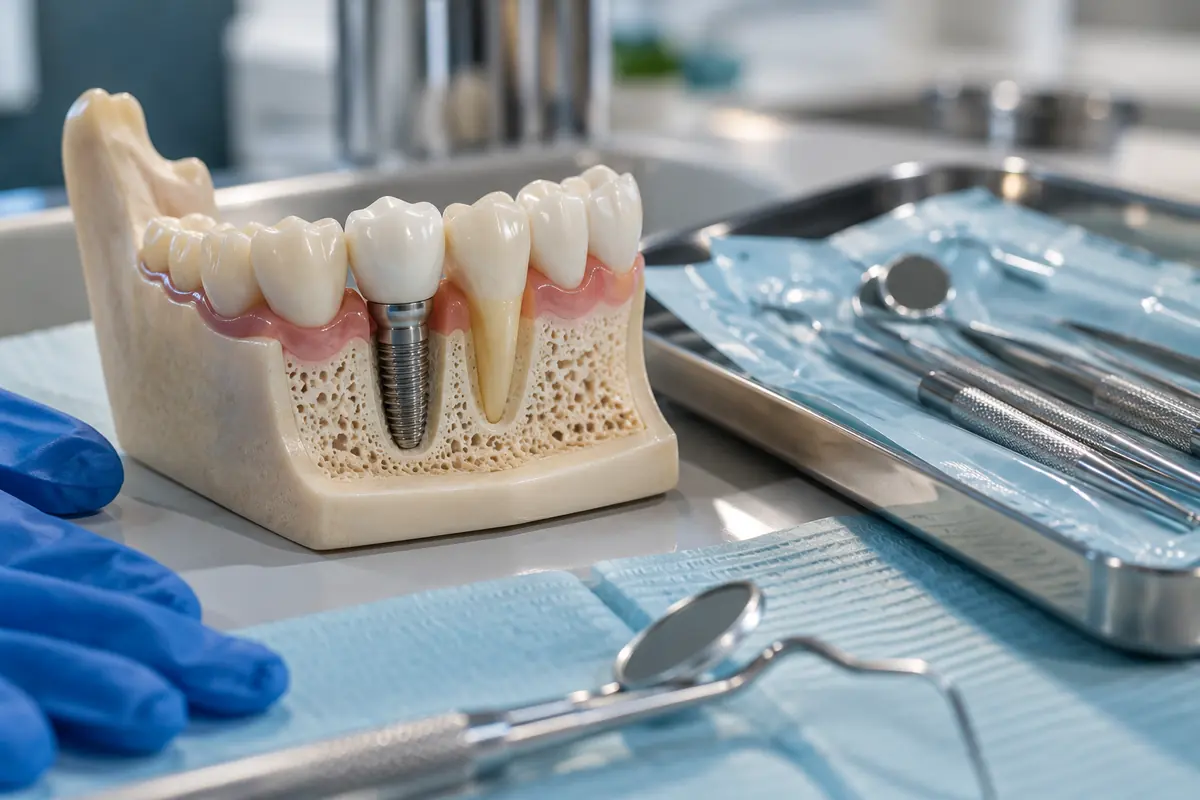
Some implant risk shows during surgery and some appears over the years. A 2025 AO/AAP systematic review reports peri-implant mucositis in about 46% of patients and peri-implantitis in about 21%. It names a history of gum disease, diabetes and smoking as the main risk factors for peri-implantitis, and stresses structured, individually tailored lifelong maintenance. That is why implant treatment is not only about placing the implant: a dentist who will maintain it at home is part of the plan. Figures differ between studies because of different definitions, so treat them as approximate.
Infection and hygiene: what to look for
- Ask about sterilisation and single-use items. Is there a written infection control policy?
- Where will surgery be done (a sterile area), and what materials are used?
- The antibiotic and medicine plan: which medicine, when and why?
- Does the organisation have someone responsible for patient safety and infection control?
- You can use the questions in OSAP's “Traveler's Guide to Safe Dental Care”, recommended by the CDC (check the content and summarise it in your own language).
Checking these practices is not your job. The aim is to measure openness. An organisation that avoids answering, or answers evasively, is a warning sign.
Risk-reduction checklist
Tick items off as you complete them. Your ticks stay in this browser only.
Who should take particular care
In general, talk to your own dentist and, if needed, your doctor before treatment if you smoke; have diabetes or a history of gum disease (risk factors for implant complications in the AO/AAP review); take regular medicines; have allergies; are pregnant; or have a chronic condition. Cutting healthy teeth at a young age (in your twenties, say) also deserves separate thought, because restorations may need renewing several times over a lifetime. Ask your dentist what that means for you.
The Türkiye context
- The risk usually sits with the facility and the decision, not the country. You need to ask the same questions in any country.
- There is an authorisation framework (see the country guide and the verification page), and certification and accreditation obligations have a transition period to 31 December 2026. An authorisation certificate is an important safeguard; for the best result, consider it together with the dentist's experience and a written treatment plan.
- Official data is limited. We found no official data on complication rates from dental tourism in Türkiye. The common figures come from dentist surveys in source countries (for example the BDA) and rest on voluntary responses. They show the experience of dentists who see such patients, not what share of treated patients have a problem.
Frequently asked questions
Is dental treatment abroad dangerous?
We do not give a general verdict. Risks vary with the type of treatment, the facility, the dentist and the follow-up arrangements. What matters is an informed decision and information you can verify.
Is it bad to have a crown?
No. With a clear indication it is the right treatment. Cutting healthy teeth with crowns for cosmetic reasons alone can be a problem. Settle this with the dentist and a second opinion.
How long does an implant last?
This page promises no lifespan. The result depends on many factors, such as bone, gum health, smoking, diabetes and maintenance. Regular maintenance is essential.
Does flying affect treatment?
The CDC says surgery and flying together raise clot risk. The dentist decides when flying is suitable for each type of dental treatment. Ask about your own health.
What should I do if a problem appears?
Health first: see a local dentist or an emergency department, prepare your records and notify the treating facility in writing (see the complaints, records and aftercare pages).
Sources
- CDC: medical tourism
- CDC Yellow Book: medical tourism (clots, infection, OSAP guide)
- TravelHealthPro (UK): travelling for treatment
- BDA survey (Dentistry.co.uk)
- LaingBuisson IMTJ: BDA survey details
- Edelhoff and Sorensen (2002), tooth removal (reported in a secondary paper, PMC)
- Tissue loss in veneer and all-ceramic crown preparation (PLoS ONE, 2018)
- Crown preparation and pulp necrosis (Inside Dentistry, secondary)
- AO/AAP systematic review (J Periodontol, 2025)
- BSP summary: peri-implant diseases
- Mondaq: veneers or crowns and legal rights (Turkish law firm, secondary)
- Rhode Island Department of Health: warnings on medical treatment abroad