
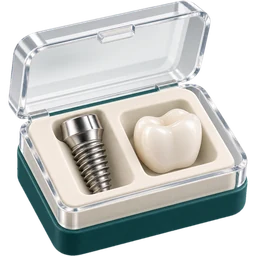
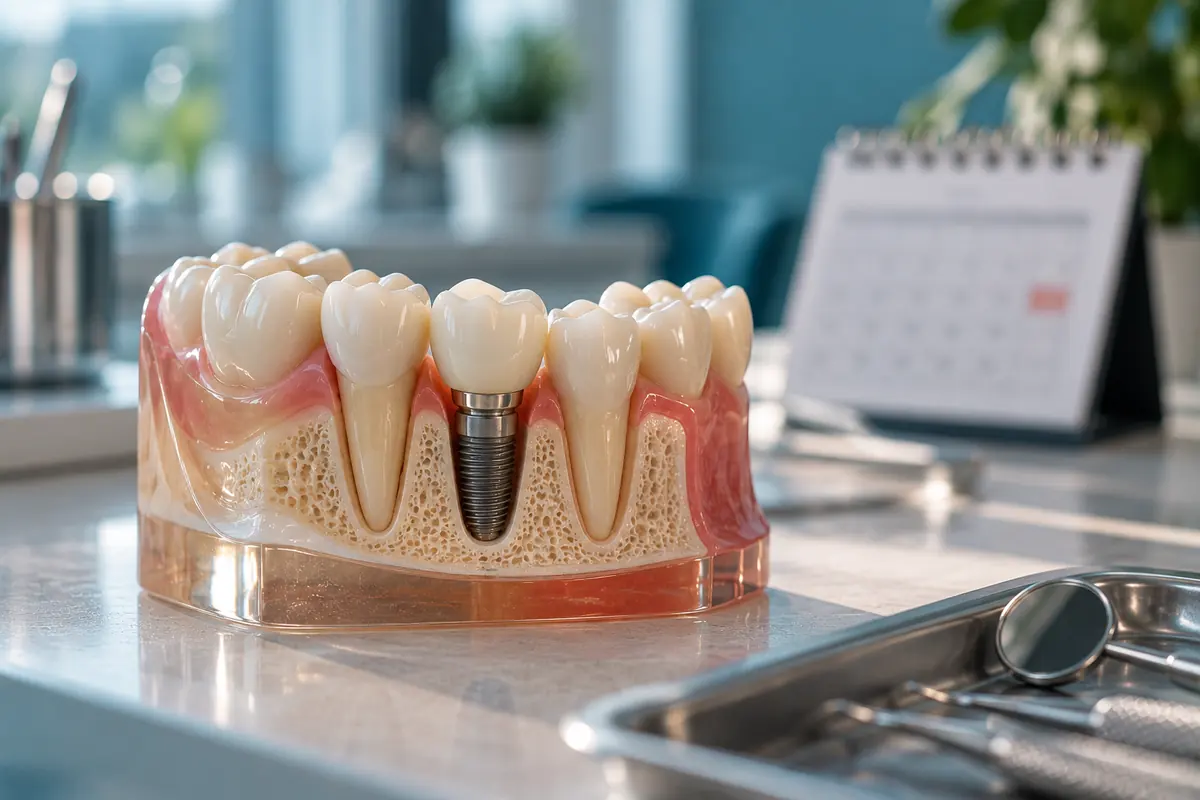
A dental implant is an artificial tooth root placed in the jawbone to hold a crown, bridge or denture. It can last a long time if it is placed in healthy bone and maintained for life, but it is surgery, it takes months rather than days, and the long-term risk is gum and bone inflammation around the implant.
For a patient travelling abroad, the key question is not only who places the implant but who will check and maintain it for the next ten years. Ask that before you ask about price.
What patients are quoted
We are collecting anonymous quotes for this treatment. Figures appear here once at least ten quotes are in.
Share the price you were quoted. It is multiple choice only and asks for no personal details. How the figures are calculated.
At a glance
- Can it be undone?
- It is surgery. An implant can be removed, but the bone changes.
- How long?
- 6 to 12 months overall (Guy's and St Thomas'); 2 to 6 months of bone healing.
- Evidence figure
- About 90% of implants placed 10 years ago still work (Leeds).
- Ask first
- Who will maintain it for the next ten years?
Implant timeline
- AssessmentExamination, X-rays, scan, plan
- Extraction, if neededOften 6 to 10 weeks before implant surgery
- Implant surgeryPost placed in the jawbone
- Gum healing1 to 2 weeks
- Bone grows onto implant2 to 6 months
- Crown, bridge or dentureSeveral visits a few weeks apart
Whole treatment: 6 to 12 months (Guy’s and St Thomas’). Faster “same-day” protocols exist; ask why they suit you.
What a dental implant is
An implant is a small post, usually titanium, that is placed into the jawbone and fuses with it over a few months. Once it has fused it can carry a single crown, a bridge or a denture. NHS hospital leaflets describe implants as long-lasting replacements for tooth roots if you care for them properly.
Dentists generally choose an implant when they do not want to cut down healthy neighbouring teeth for a bridge, or when a bridge or denture would be difficult or impossible because there are not enough suitable teeth or gum to support it.
Who it may suit, and who should be careful
- Suitability depends on your general health, whether you smoke, your age (usually after the jaw has finished growing) and the health of your teeth, gums and jawbone.
- Leeds Teaching Hospitals lists these as higher-risk factors: smoking, poor oral hygiene, a history of gum disease, radiotherapy to the jaw, poorly controlled diabetes and bisphosphonate medicines.
- You need to accept several appointments over months and at least one surgical procedure.
- Conventional options (a bridge, a denture or leaving the gap) are normally considered first on the NHS. That is a good reminder that an implant is a choice, not the only answer.
Alternatives to ask about: leaving the gap if it does not affect appearance or eating (the neighbouring teeth can drift slightly), a removable denture, or a bridge supported by neighbouring teeth.
Stages and how long they take
- Assessment.Examination, X-rays and usually a 3D cone beam CT scan to see the bone. A treatment plan you can read and keep.
- Extractions, if needed.Often done 6 to 10 weeks before implant surgery, although placing an implant straight after an extraction is sometimes possible.
- Bone grafting, if needed.Not everyone needs it. Grafting makes treatment more complex and longer, and a graft can cause swelling, bruising and pain.
- Implant surgery.Usually under local anaesthetic, in one or two stages. Leeds describes surgery of around 90 minutes. Sedation or general anaesthetic is sometimes used.
- Healing.Gum healing takes 1 to 2 weeks. Bone then grows onto the implant, which takes 2 to 6 months before the implant is used.
- Crown, bridge or denture.Impressions, often a temporary tooth, then the final tooth. This can take several visits a few weeks apart.
Guy's and St Thomas' says the whole treatment could take 6 to 12 months. Some clinics offer much faster “same-day” protocols. These exist and may suit some patients, but a shorter timetable is a reason to ask more questions, not fewer: why is it suitable for me, what is the plan if the implant does not fuse, and who will see me during healing?
Risks, and what the evidence says
| Risk | What it means | What the sources say |
|---|---|---|
| The implant does not fuse | The implant cannot be used and is removed or replaced. | Leeds calls early failure “rare”. It is more likely in some people, including smokers. |
| Inflammation and bone loss around the implant | Peri-implant mucositis (gum inflammation) and peri-implantitis (with bone loss). The main long-term problem. | A 2025 AO/AAP systematic review reports mucositis in about 46% of patients and peri-implantitis in about 21%, with figures varying by definition. See also the risk page. |
| Mechanical wear and breakage | Loose screws, chipped porcelain, worn clips on an overdenture. | Leeds names chipped porcelain and worn clips. Parts can loosen or wear and the implant may stop working if this is not treated quickly (Guy's and St Thomas'). |
| Surgical effects | Swelling, bruising, pain; with upper jaw work, the sinus; with lower jaw work, nerves. | Ask the surgeon to explain which structures are close to your planned implant and how that was checked on the scan. |
| Long-term survival | How many implants are still working after many years. | Leeds says about 90% of implants placed 10 years ago are still present and functional. This is a general figure, not a promise for you. |
Maintenance is part of the treatment. After treatment, most patients return to their own dentist for routine care. Long-term care means daily brushing and cleaning between teeth, regular dental visits and not smoking. Guy's and St Thomas' notes that a local dentist can maintain implants, at the patient's own cost.
Questions to ask before you agree
Tap a question to copy it, then paste it into a message or an email.
Implant checklist
Tick items off as you complete them. Your ticks stay in this browser only.
Before you book in Türkiye
The same checks apply whichever treatment you choose. Each links to a full guide.
- Check the authorisation. Make sure the clinic, and any agency, holds a Ministry of Health authorisation for international patients. How to verify it
- Get the plan in writing, tooth by tooth. It should name the treatment, materials and brands for each tooth, and the full price. Questions to ask
- Read the guarantee before you pay. Find out what it covers, for how long and who pays for travel if something needs fixing. Guarantees
- Know what you are agreeing to. You have the right to clear information about risks and alternatives before you consent. Informed consent
- Take your records home. Ask for X-rays, scans and a written summary, including implant brands and sizes. Dental records
- Plan aftercare before you go. Find a dentist at home who will see you for checks and problems. Follow-up care
- Know where to turn if things go wrong. Complaint routes
Frequently asked questions
Is an implant better than a bridge?
Neither is always better. A bridge may need neighbouring teeth to be cut down, which is irreversible. An implant needs surgery and lifelong maintenance. Which is better depends on your teeth, bone, health and priorities.
Can I get implants and teeth in one trip of a week?
Some protocols allow teeth to be fitted quickly, but the implant still needs months to bond with the bone. A short trip usually means a temporary tooth and a second visit later. Ask for the full timetable.
How long will an implant last?
No source gives a promise for an individual. Leeds says about 90% of implants placed ten years ago are still functioning. Gum health, smoking, diabetes and maintenance all matter.
What if something goes wrong when I am home?
See a local dentist, ask for your records, and contact the treating clinic in writing. See the aftercare, records and complaints pages.